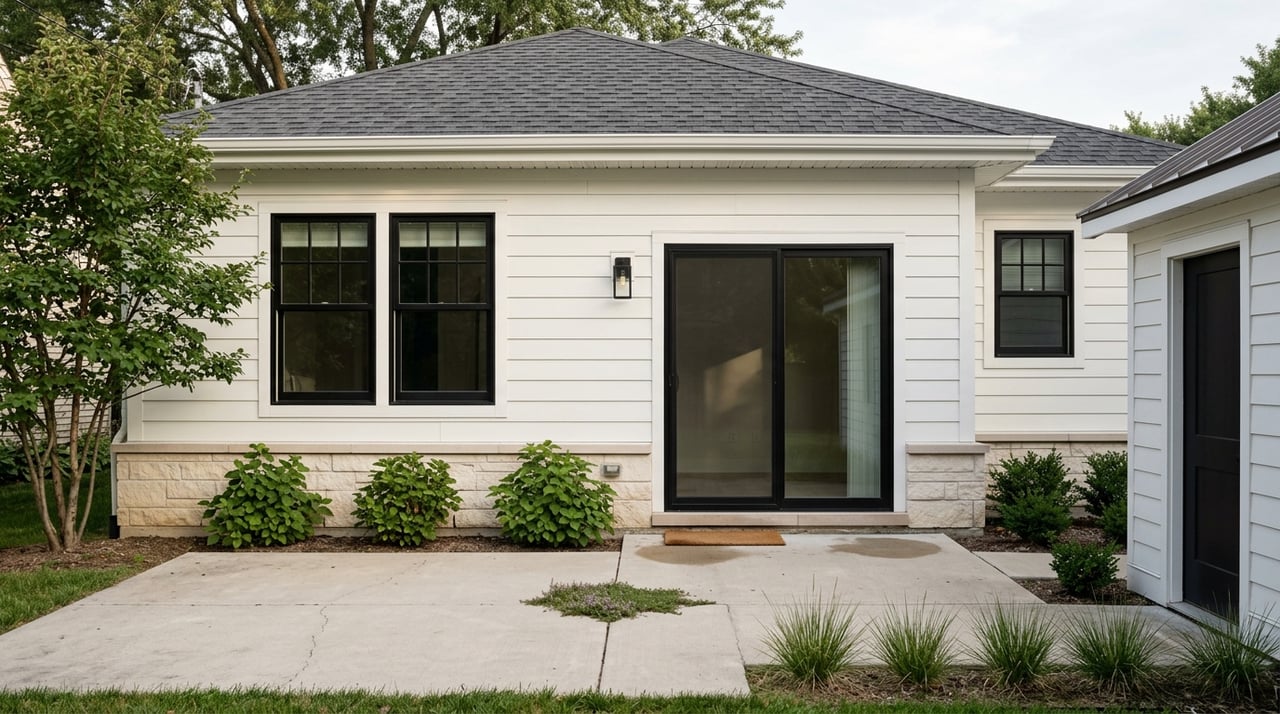
Fulton MO Investment Property: A Smart Buyer’s Guide
June 4, 2026
June 4, 2026
If you are thinking about buying investment property in Fulton, MO, you are probably asking a simple question: Will the numbers and the location work in your favor? That is a smart place to start. Fulton offers a mix of renter demand, modest price points, and property types that can fit many buyers, but it also calls for careful research and realistic underwriting. In this guide, you will learn what drives rental demand in Fulton, what kinds of properties you are most likely to find, and what local costs and processes you should plan for before you buy. Let’s dive in.
Fulton is the seat of Callaway County and a smaller Mid-Missouri city with access to Interstate 70 and U.S. Route 54. That gives you a location with practical connectivity for residents who commute or travel within the region. It also means Fulton is part of a broader Mid-Missouri housing conversation, not just a stand-alone small town market.
The city also has built-in demand drivers that matter when you are evaluating rental property. Westminster College and William Woods University contribute students, faculty, and staff to the area, and the county-seat role supports public-sector employment. Together, those factors suggest a rental base that can include students, university staff, county workers, and commuters connected to Columbia and Jefferson City.
One of the clearest signals for investors is that Fulton is more renter-heavy than Callaway County overall. In the 2020 to 2024 ACS data, Fulton’s owner-occupied housing rate was 48.2%, compared with 75.5% for the county. That does not guarantee success for every rental, but it does tell you Fulton has a stronger renter presence than the surrounding county market.
For you as a buyer, that can support the case for looking closely at neighborhoods and property types within the city. A market with a meaningful renter share often gives you more leasing opportunities than a market dominated by owner-occupants. Still, demand can vary based on unit size, condition, location, and price point.
If you picture buying a large apartment complex, Fulton may not be the market where that is easiest to find. Callaway County’s housing needs assessment shows that the housing stock is still dominated by single-family detached homes. About 7% of units are 2- to 4-unit properties, and properties with more than five units make up no more than 5% of the stock.
That matters because it shapes your search. In and around Fulton, you are more likely to see opportunities such as:
The same county assessment notes that market-rate multifamily rentals are mainly concentrated in Fulton and Holts Summit, usually in low-rise or garden-style formats. So if your strategy is to buy and hold a smaller residential income property, Fulton may offer a better fit than if you are targeting a large multifamily asset.
Age matters when you are buying investment property, but Fulton is not defined by extremely old housing stock in the same way some older Midwestern communities are. According to the county housing assessment, more than half of the county’s housing stock was built within the last 40 years, and more than three-quarters was built after 1960.
That does not mean you can skip inspections or repair planning. It does suggest that many properties may fall into a more typical maintenance cycle rather than requiring full historic-home level rehab. As you compare options, you will still want to budget for system updates, deferred maintenance, and future capital replacements.
Fulton appears to be a relatively modest-rent market, which is important for your underwriting. The 2020 to 2024 ACS lists Fulton’s median gross rent at $836, while the county housing study found that listed rents were mostly below $1,000 per month, with only a small number above $1,500. That tells you not to assume aggressive rent growth without solid comparable data.
Published price and rent snapshots can also vary a lot based on source and methodology. Realtor.com reported a median listing price around $199.5K and median days on market of 60, while Zillow reported an average home value of $246,910 and an average rent of $1,126 in late April 2026. Those figures are not interchangeable, so you should treat them as broad signals, not exact underwriting inputs.
That is where current MLS data and property-specific comps become essential. Before you make an offer, you should compare the subject property with similar homes or units in Fulton based on size, condition, layout, and likely tenant profile. In a market like this, the difference between an average property and a well-positioned one can have a big impact on cash flow.
The county housing study reported that Fulton averaged 2.82 months of housing supply in 2022. That is well below the 5- to 6-month level the report considers a healthier balance between buyers and sellers. In practical terms, that points to tighter inventory conditions.
For you, low supply can mean you need to move with a clear plan when the right property appears. It can also mean you should be disciplined about your criteria, because competition and limited options can push buyers toward optimistic assumptions. A strong buy decision starts with facts, not urgency.
A common mistake in investment buying is focusing too much on the purchase price and loan payment. A stronger approach is to model the full cost of ownership before you close. In Fulton, your underwriting should include the basics as well as local factors that may affect rehab or ongoing operation.
Your expense review should include:
This kind of conservative planning can help you avoid surprises. It also gives you a better way to compare two properties that may look similar at first glance but have very different long-term costs.
Missouri property tax is based on assessed value, not simply the market value you think a home has today. The Missouri State Tax Commission says residential real property is assessed at 19% of true value in money. The state also assesses real property as of January 1 in odd-numbered years.
If you are reviewing taxes on a property, keep in mind that future assessments and tax changes may affect your numbers. The county Board of Equalization hears taxpayer complaints and reviews assessments, which is also useful context when you are studying a parcel’s tax history. This is one more reason to avoid relying only on a seller’s current tax bill when projecting long-term ownership costs.
If your investment plan includes updates, repairs, or a value-add strategy, you need to understand the local permit process before closing. The City of Fulton Public Works department says building permits and applications can be submitted electronically, by mail, or at City Hall. Its engineering staff oversee compliance with local code ordinances.
The city also publishes a zoning map, and the Planning and Zoning Commission reviews zoning changes and plats. Public Works lists permit types that include sewer tapping and reconnection. For you, that means renovation timelines should include permit review, inspections, and the possibility of added fees if your project involves site work or utility connections.
Good investment decisions usually come from good due diligence. In Callaway County, the Recorder of Deeds office provides public research access to deeds, deeds of trust, releases, surveys, plats, affidavits, and tax liens. The Assessor values parcels and personal property accounts, while the Collector handles county tax administration.
The City of Fulton clerk’s office also handles permits, licenses, zoning and annexation requests, and public records requests. These offices can help you verify the background of a property and spot issues that may affect your plans. If a property looks attractive on paper but has unresolved permit questions or title concerns, that can change the deal quickly.
Before you buy investment property in Fulton, it helps to slow the process down and work through a clear checklist. That can protect you from overpaying, underestimating costs, or buying the wrong product for the local market.
Use this checklist as a starting point:
Buying investment property is rarely just about finding a building. It is about understanding the market, timing, records, condition, and numbers all at once. In a city like Fulton, where published price and rent data can vary and where local permitting and property records matter, having broker-led guidance can help you make a more confident decision.
That is especially true if you are balancing a purchase from outside the area, comparing several property types, or trying to move quickly without skipping key steps. A hands-on local broker can help you sort through comps, coordinate with inspectors and lenders, and keep your due diligence focused on the details that matter most.
If you are exploring investment property in Fulton or anywhere in Mid-Missouri, ProMO Real Estate offers personalized, broker-led guidance to help you evaluate opportunities, understand local market conditions, and move forward with clarity.
Stay up to date on the latest real estate trends.






At ProMO Real Estate, we consistently go above and beyond to provide exceptional service, ensuring our clients' needs are not only met but exceeded. Get in touch with us today and discover how our collaborative approach, providing realty services in and around Columbia, MO, can transform your real estate journey into an unforgettable success story
Get In Touch With Phebe